
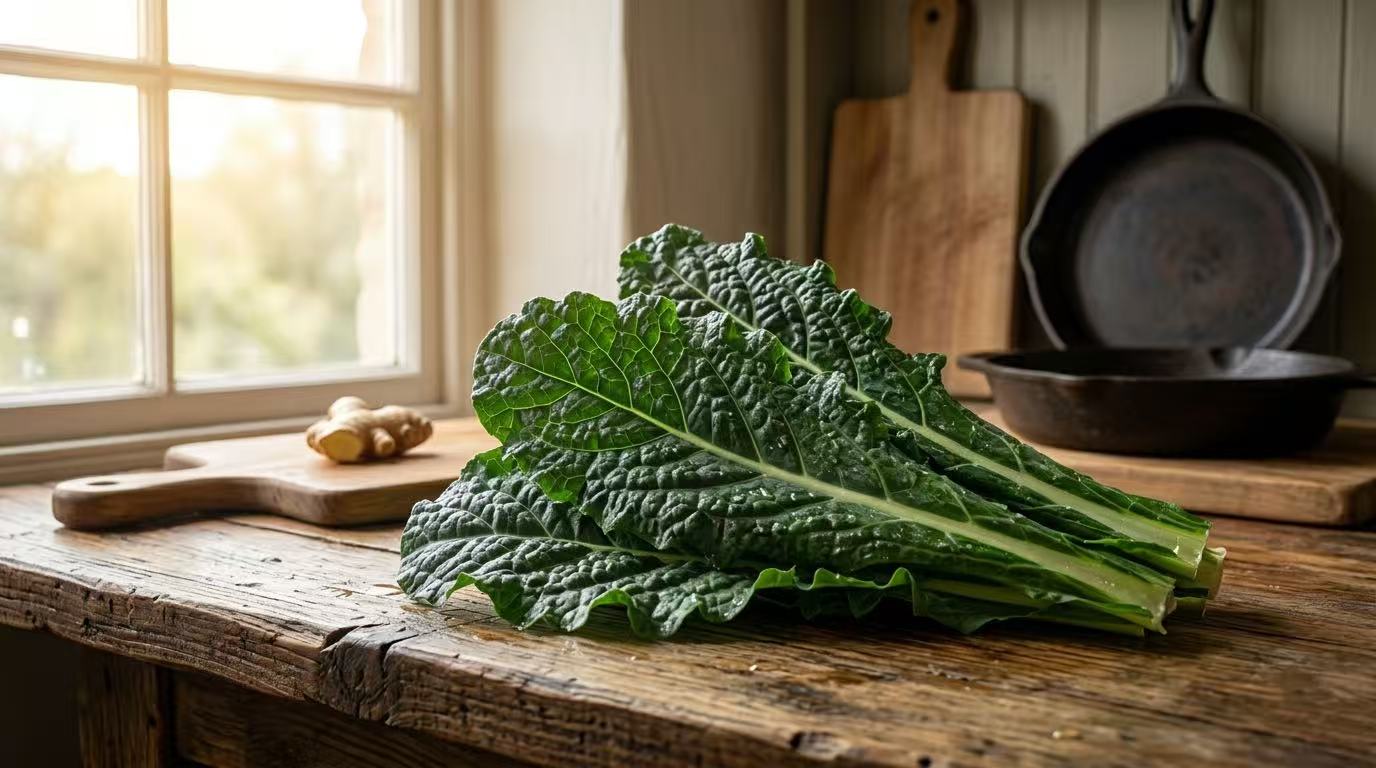
Kale Health Benefits | Eattonic
The Ultimate Guide to Kale: Ancient Wisdom Meets Modern Superfood
When exploring true kale health benefits, we often hear about Western science’s obsession with this nutrient-dense superfood. But how does this leafy green fit into the ancient wisdom of Traditional Chinese Medicine (TCM)? At Eattonic, we believe that the most profound wellness comes from bridging the gap between modern nutritional science and time-tested food therapy.
Let’s open up Grandmother’s pantry and look at kale not just as a trendy salad base, but as a dynamic tool for restoring your body’s natural balance.
Quick Facts / TL;DR
- TCM Nature & Flavor: Slightly Cooling (when raw) to Neutral (when cooked); Sweet and slightly Bitter.
- Key Meridians: Enters the Spleen and Stomach (the centers of digestion).
- Modern Nutrient Stars: Vitamin K, Vitamin C, Lutein, and Glucosinolates (powerful cellular protectors).
- TCM Superpower: Clears heat (reduces inflammation) and supports the smooth flow of vital energy (Qi) when prepared correctly.
Meet the Ingredient
While kale is often seen as a modern Western darling, cruciferous vegetables have long held a prominent place in the Eastern kitchen. Belonging to the Brassica family (alongside cabbage and broccoli), kale is a resilient, cold-weather crop. Historically, vegetables from this family were prized in traditional diets for their hardiness and their ability to nourish the body during the harsh, depleting winter months.
The TCM Perspective: Balancing Your Inner Climate
In Traditional Chinese Medicine, food is evaluated not just by its macronutrients, but by its “energetics”—how it behaves inside your body.
Kale is inherently Cooling and slightly Bitter. In TCM, bitter flavors are excellent for clearing “Heat” (which we often experience in the West as systemic inflammation, irritability, or acid reflux). However, because raw kale is so cooling and highly fibrous, eating massive bowls of it raw can be taxing on your “Spleen Qi”—your digestive fire.
Think of your digestive system as a gently simmering pot of soup. Dumping cold, raw, tough leaves into the pot forces your body to work overtime to break them down, potentially leading to bloating or metabolic sluggishness (what TCM calls “Dampness”). This is why Eastern wisdom almost always recommends lightly cooking or wilting your leafy greens to unlock their nutrients without extinguishing your digestive fire.
Maximizing Kale Health Benefits: Modern Nutritional Power
Modern science completely backs up the incredible reputation of this leafy green. When you incorporate kale into a balanced diet, you are feeding your cells an abundance of protective compounds.
- Bone & Blood Support: Kale is one of the world’s best sources of Vitamin K, which is essential for blood clotting and bone metabolism.
- Immune Boosting: A single cup of lightly cooked kale provides a massive dose of Vitamin C, neutralizing free radicals and supporting skin health.
- Cellular Detoxification: Kale contains glucosinolates, which break down into biologically active compounds that have been shown to protect cells from DNA damage.
(Source: Šamec, D., et al. (2019). “Kale (Brassica oleracea var. sabellica) as a miracle food: Science behind the claims”. Critical Reviews in Food Science and Nutrition. Read Study)
How to Select and Store
- What to Look For: Choose bunches with firm, deeply colored leaves and hardy stems. Avoid leaves that are yellowing, browning, or wilted.
- Storage: Keep kale unwashed in a loosely wrapped paper towel inside a breathable bag in the crisper drawer of your fridge. It should stay vibrant for 5 to 7 days. Wash only right before you plan to use it.
- Varieties: Curly kale is great for soups and baking, while Lacinato (Dinosaur) kale is flatter, slightly sweeter, and ideal for quick sautés.
Easy Ways to Use It (The TCM Way)
To get the most out of your greens while respecting your digestive fire, try these simple preparations:
- The Ginger-Garlic Quick Sauté: Sauté chopped kale in a little sesame oil with fresh ginger and garlic. Ginger and garlic are highly Warming in TCM, perfectly balancing the cooling nature of the kale.
- Healing Bone Broth Soup: Stir finely chopped kale into a warm chicken or beef bone broth during the last three minutes of cooking. This softens the fibers and infuses the broth with vitamins.
- The “Massaged” Salad: If you must eat it raw, finely chop Lacinato kale and massage it vigorously for 3-5 minutes with olive oil, lemon juice, and a pinch of sea salt. This mechanical breakdown mimics the digestive process, making it much easier on your stomach. Explore more gentle recipes on our Eattonic homepage.
🌿 Discover Your Unique Food Therapy Blueprint
Are you wondering if cooling foods like raw kale are helping or hindering your digestion? Wellness isn’t one-size-fits-all. Let’s find out exactly what your body needs to thrive.
Book a private, 1:1 consultation with our TCM nutrition experts for a fully customized food therapy meal plan tailored to your unique metabolic constitution.
👉 Message us directly on WhatsApp to start your journey today!
Precautions & Contraindications
While kale is incredibly healthy, it isn’t for everyone in every situation:
- Blood Thinners: Because it is extremely high in Vitamin K (which promotes blood clotting), individuals on blood-thinning medications (like Warfarin) should consult their doctor before drastically changing their kale intake.
- Thyroid Concerns: Raw kale contains goitrogens, which can interfere with thyroid function in high amounts. Cooking kale significantly reduces these compounds.
- Cold Digestion: If you “run cold,” frequently experience loose stools, or have a sluggish metabolism, avoid raw kale smoothies and stick to warming, cooked preparations.
FAQs
Are kale health benefits better absorbed when cooked or raw?
From a combined TCM and modern science standpoint, lightly cooking kale is superior. Gentle steaming or sautéing breaks down the tough cellulose structure, making the vitamins and minerals much easier for your body to absorb while protecting your digestive energy.
Can I drink kale juice every day in a TCM diet?
TCM generally advises against daily cold, raw juices, especially in the winter or for individuals prone to bloating and fatigue. If you love green juice, add warming elements like fresh ginger, and try to consume it at room temperature rather than ice-cold.
Does kale help with metabolic sluggishness?
Yes, but preparation matters. The high fiber content in cooked kale helps sweep the digestive tract and promote regular bowel movements, which resolves “Dampness” (sluggishness) in TCM.
Medical Disclaimer: The information provided is for educational purposes only and is not intended to replace medical advice. Expert Review: This article has been reviewed for nutritional accuracy by Howie, BSc in Nutrition.