
Romaine Lettuce Benefits: TCM Wisdom & Modern Science | Eattonic
The Unexpected Romaine Lettuce Benefits: A TCM & Modern Science Guide
When we think of everyday vegetables, we often overlook the profound healing properties sitting right in our salad bowls. The true Romaine lettuce benefits go far beyond simply adding a satisfying, hydrating crunch to your lunch. In Traditional Chinese Medicine (TCM), this humble leafy green is revered as a functional food capable of cooling an overheated system, flushing out metabolic sluggishness, and even lulling an overactive mind to sleep.
Let’s explore how to unlock the therapeutic magic of this familiar kitchen staple.
Quick Facts / TL;DR
- TCM Nature & Flavor: Cooling (Cold nature); Sweet and slightly Bitter.
- Meridians Entered: Stomach, Large Intestine, and Liver.
- Standout Modern Nutrients: Lactucin (a natural sleep-enhancer), Vitamin K, Folate, and cardiovascular-protecting polyphenols.
- Primary Action: Promotes homeostasis by clearing excess heat, hydrating the body, and soothing the nervous system.
Meet the Ingredient: More Than Just a Salad Base
While Western diets primarily relegate Romaine lettuce (Lactuca sativa) to Caesar salads and sandwich toppings, Eastern culinary traditions view it through a more holistic lens. In Chinese culture, lettuce is known as Sheng Cai (生菜), which translates literally to “raw vegetable.” However, it is culturally beloved because it sounds phonetically identical to the phrase “generating wealth” or “giving birth to fortune.”
Beyond its auspicious name, Romaine has a rich history in folk medicine. Ancient Egyptians, Greeks, and Romans all recognized the milky sap at the base of the lettuce stems—known as lactucarium—for its mild, natural sedative properties. Today, at Eattonic, we love reintroducing this familiar leafy green as a gentle, everyday remedy you can find in almost any grocery store.
The TCM Perspective: Cooling the Body and Calming the Mind
In Traditional Chinese Medicine, food is energy. If you are experiencing symptoms of “Heat” or “Dampness”—which in modern terms often translates to systemic inflammation, acidity, water retention, or a sluggish metabolism—you need cooling, hydrating foods to restore balance.
Romaine lettuce offers a beautifully gentle way to achieve this homeostasis:
- Clears Heat: Its cooling nature helps soothe internal heat, making it an excellent food choice for hot summer months or for individuals who run naturally hot (e.g., those prone to red complexion, irritability, or inflammatory skin flare-ups).
- Resolves Dampness: The slight bitterness of Romaine helps stimulate digestion and encourages the body to flush out excess fluids through urination, reducing bloating and metabolic sluggishness.
- Calms the Shen (Spirit): In TCM, an agitated “Shen” manifests as anxiety, insomnia, or an overactive mind. The sweet and bitter profiles of Romaine help ground this vital energy, promoting deep relaxation.
Unpacking the Modern Romaine Lettuce Benefits
Modern nutritional science is finally catching up to what grandmother’s pantry has known all along. Here is how the scientific community validates the healing power of Romaine:
1. A Natural Sleep Aid and Stress Reliever
The milky white fluid found in the stem of Romaine lettuce contains potent phytochemicals called lactucin and lactucopicrin. These compounds interact with the GABA receptors in our brains—the same pathways targeted by many anti-anxiety and sleep medications—to naturally promote deep, restorative sleep without the groggy side effects.
(Source: Kim, H.-W. et al., 2019. “Effectiveness of the Sleep Enhancement by Green Romaine Lettuce (Lactuca sativa) in a Rodent Model”. Biological & Pharmaceutical Bulletin. Read Study)
2. Cardiovascular Protection and Antioxidant Power
Romaine lettuce is packed with heart-healthy dietary fiber, Vitamin C, and phenolic compounds like chlorogenic acid. Together, these elements act as a cardiovascular shield, helping to improve cholesterol metabolism and prevent the oxidative stress that leads to arterial damage.
(Source: Shi, L. et al., 2022. “Phytochemicals, Nutrition, Metabolism, Bioavailability, and Health Benefits in Lettuce—A Comprehensive Review”. Antioxidants. Read Study)
3. Bone Health and Cellular Repair
Just one cup of Romaine provides a significant portion of your daily Vitamin K, essential for bone mineralization, as well as Folate (Vitamin B9), which is crucial for healthy cellular division and DNA repair.
How to Select and Store for Maximum Freshness
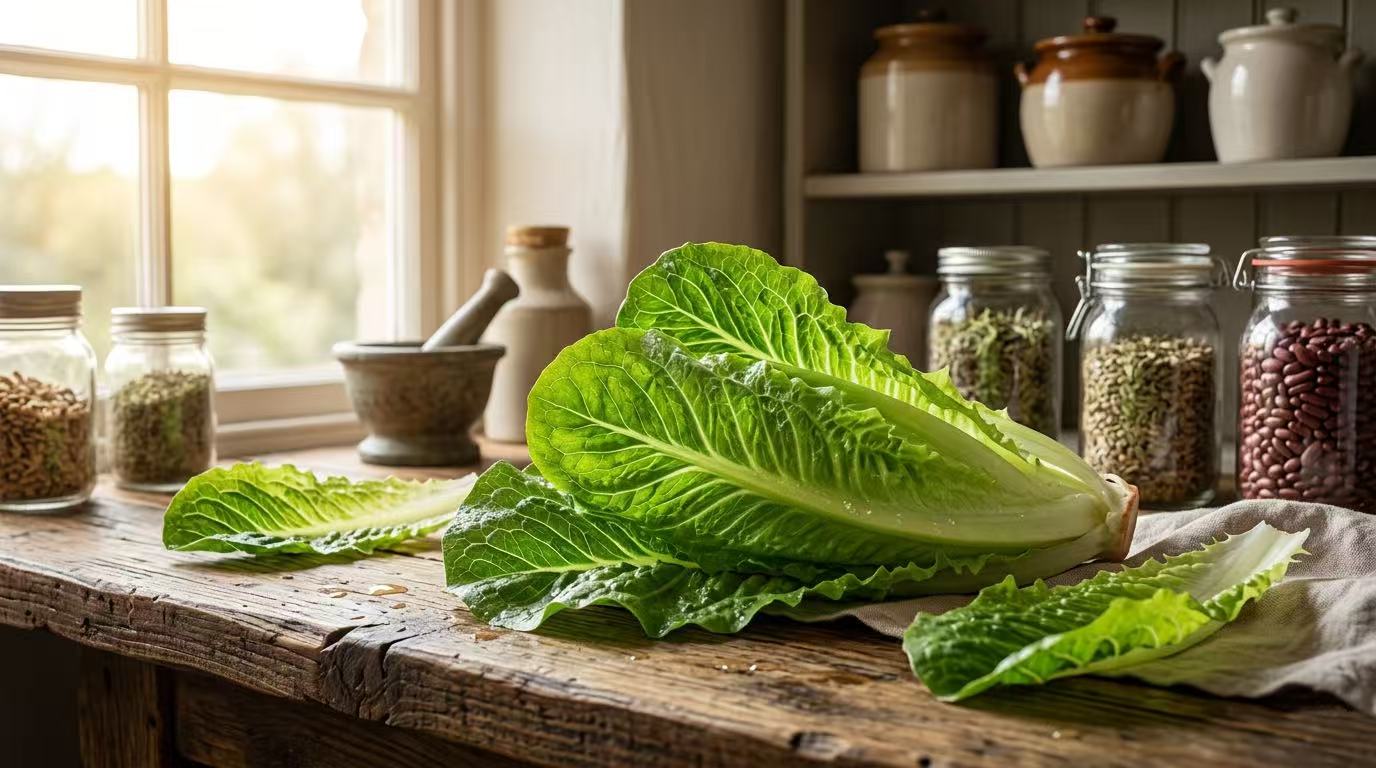
- What to Look For: Choose Romaine heads with crisp, tightly packed, and vibrantly dark green outer leaves. The darker the leaf, the higher the concentration of antioxidants and folate. Avoid heads with wilted, slimy, or rust-colored spots.
- Storage: Keep Romaine unwashed in a loosely closed plastic or breathable produce bag in the crisper drawer of your refrigerator. To maintain its crispness and protect its water-soluble vitamins, only wash the leaves immediately before you plan to eat them.
Easy Ways to Use It (The TCM Way)
To truly harness the Romaine lettuce benefits from an Eastern perspective, we sometimes step away from the raw salad bowl:
- Gently Blanched (The Digestion-Friendly Way): Raw, cold foods can sometimes shock a sensitive digestive system. Try lightly blanching whole Romaine leaves in boiling water for just 15-20 seconds. Drizzle with a tiny bit of sesame oil and gluten-free tamari. This process preserves the crunch and nutrients while making it gentler on your gut.
- Soothing Romaine Stem Tea: Don’t throw away the bitter, milky core! The stem holds the highest concentration of sleep-promoting lactucin. Simmer the chopped stems in water for 15 minutes to create a mild, relaxing evening tea to prepare your nervous system for sleep.
- Wilted into Soups: Toss shredded Romaine into your bone broth or miso soup right at the very end of cooking. It adds a vibrant pop of color, texture, and hydration without losing its beneficial enzymes.
🌿 Ready to Transform Your Health Through Food?
Navigating wellness can feel overwhelming, but your healing journey doesn’t have to be complicated. If you’re looking to balance your metabolism, improve your sleep, or simply eat more in tune with your body’s unique energetic needs, I am here to help.
Let’s create a customized TCM-based meal plan just for you.
👉 Click here to message us directly on WhatsApp for a 1:1 Private Consultation
Precautions & Contraindications
While Romaine is incredibly safe and healthy for the vast majority of people, TCM emphasizes that no single food is perfect for everyone.
- If You “Run Cold”: Because Romaine has a deeply cooling nature, individuals with a “Cold” constitution (those who frequently have cold hands/feet, suffer from chronic loose stools, or have very weak, sluggish digestion) should avoid eating it raw in large quantities. Opt for lightly cooked or blanched Romaine with warming spices like ginger to balance its thermal nature.
- Blood Thinners: Romaine is rich in Vitamin K, which plays a key role in blood clotting. If you are on prescribed blood-thinning medications (like Warfarin), you do not need to avoid it, but you should maintain a consistent daily intake of Vitamin K-rich greens to keep your medication levels stable.
FAQs
Can I eat Romaine lettuce every day?
Yes! It is a fantastic, hydrating, and low-calorie vegetable for daily consumption. Just ensure you rotate your greens (mixing in spinach, kale, and arugula) to get a broad spectrum of nutrients and to support a diverse gut microbiome.
Is cooked Romaine lettuce healthier than raw?
From a TCM perspective, yes, especially if you have a sensitive digestive tract. Cooking breaks down tough cellular walls, making the nutrients easier to absorb while removing the “cold” energetic shock to your stomach. A quick stir-fry or blanching is highly recommended!
Does Romaine lettuce actually help with sleep?
Science and history both say yes. The milky sap (lactucarium), particularly concentrated in the stem and core of the lettuce, contains mild natural sedatives that help relax the nervous system. Boiling the stems to make a light tea is a traditional remedy for insomnia.
Medical Disclaimer: The information provided is for educational purposes only and is not intended to replace medical advice. Expert Review: This article has been reviewed for nutritional accuracy by Howie, BSc in Nutrition.